
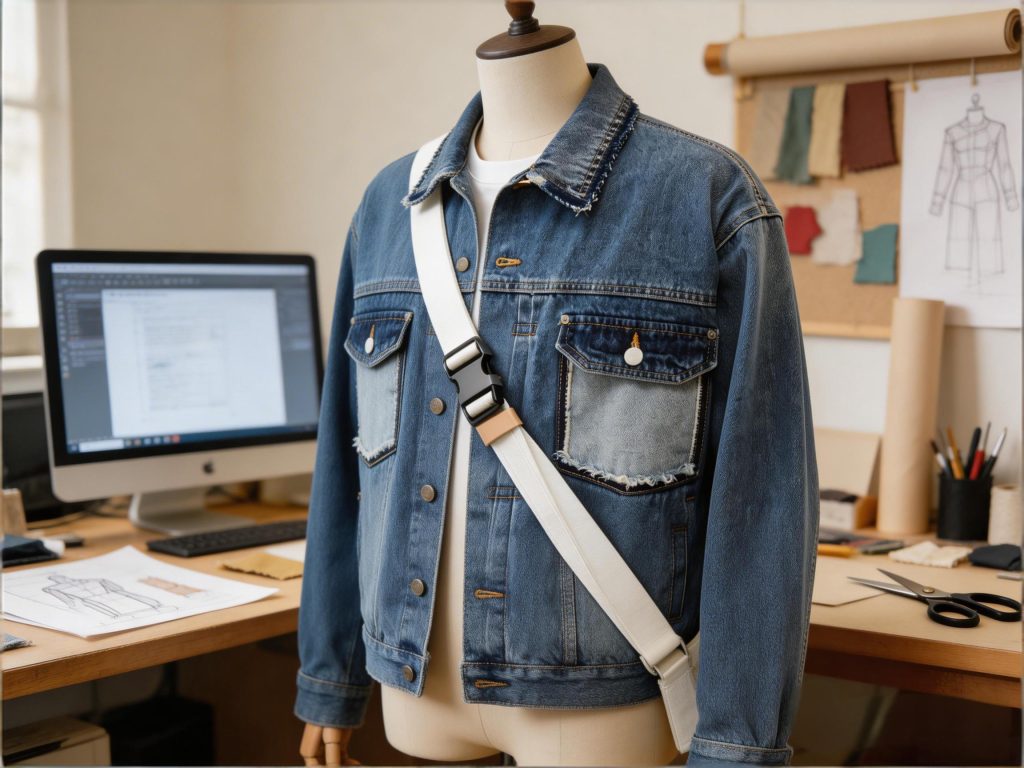
Have you ever wondered how a men’s denim jacket goes from a bulky roll of fabric to a stylish, wearable piece? The production process has clear, sequential steps—each critical to the final product. When you partner with a professional denim jacket manufacturer, understanding these steps helps you plan your orders better. It also explains why high-quality denim jackets feel sturdier, fit better, and last longer than cheap alternatives. This inside look demystifies the process and strengthens your partnership with your manufacturer.
Design & Pattern Making: The Foundation of a Great Fit
Every great denim jacket starts with a solid design and accurate pattern. You share your vision—whether it’s a classic trucker style, a slim-fit version, or a custom design with unique details. The manufacturer’s skilled pattern maker then translates your ideas into a precise template. This pattern is created on paper or digital software, outlining every piece of the jacket: front panels, back piece, sleeves, collar, cuffs, and pockets. Getting the pattern right is non-negotiable. It directly dictates how the jacket fits on different body types. A tiny error in the pattern—even a few millimeters—can make the jacket feel too tight, too loose, or lopsided. The pattern maker will also adjust for denim’s thickness, ensuring seams and hems lay flat once sewn.
Denim Fabric Selection & Preparation: Quality Starts Here
Before any cutting or sewing, the right denim fabric must be chosen and prepped. Not all denim is the same—manufacturers offer options like raw denim, pre-washed denim, or stretch denim (blended with spandex). Your choice depends on your brand’s style and target audience: raw denim appeals to denim enthusiasts, while pre-washed denim is ready to wear without shrinking. Once selected, the denim roll goes through pre-treatment. This step removes excess dye, shrinks the fabric, and softens it slightly. Pre-treatment prevents the jacket from shrinking or fading drastically after your customer’s first wash. Skipping this step is a common mistake in cheap production, leading to unhappy customers and returns.
Precision Cutting: Ensuring Uniformity Across Every Piece
With the pattern finalized and fabric prepped, it’s time for cutting. Manufacturers lay multiple layers of denim on a large cutting table—sometimes 50 layers at once—to maximize efficiency. The paper or digital pattern is laid on top and secured to prevent shifting. A computer-guided cutting machine (or skilled manual cutter for small batches) cuts through all layers at once, following the pattern exactly. Precision is key here. A crooked cut means pieces won’t align during sewing, ruining the jacket’s shape. After cutting, each set of jacket pieces is bundled together with a tag. This keeps pieces organized and ensures no part gets mixed up with other orders during sewing.
Assembly Line Sewing: Bringing the Jacket to Life
Sewing is where the jacket truly comes together, and most manufacturers use an assembly line for speed and consistency. Each worker specializes in one specific task, becoming an expert at it. One worker sews the front pockets onto the jacket panels. Another stitches the shoulder seams to connect the front and back. A third attaches the collar, while someone else adds the cuffs and hem. This division of labor keeps production efficient and reduces errors. Denim is thick, so workers use heavy-duty sewing machines and strong thread (usually cotton or polyester blend) to ensure seams hold up to wear and tear. The jacket moves from station to station until all pieces are sewn together, forming a complete, wearable shape.
Hardware Attachment & Thread Trimming: Adding Durability & Polish
After sewing, the jacket gets its finishing touches with hardware and thread trimming. Buttons, rivets, and zippers (if your design includes them) are attached using specialized machines. Rivets are crucial for denim jackets—they reinforce high-stress areas like pocket corners and seams, preventing them from tearing. A quality manufacturer checks each rivet and button to ensure they’re secure; loose hardware is a top complaint with low-quality jackets. Next, any loose threads are trimmed with small scissors, giving the jacket a clean, professional look. This step may seem minor, but it elevates the jacket’s overall appearance and shows attention to detail.
Quality Inspection: Catching Flaws Before Finishing
Before the final step, every jacket undergoes a strict quality inspection. A dedicated inspector checks every seam for loose stitching or uneven lines. They test buttons and rivets to make sure they’re secure. They look for stains, fabric flaws, or misaligned pieces. Any issues—like a missing button or a crooked pocket—are fixed immediately. Inspectors also check the jacket’s fit by trying it on a mannequin, ensuring it matches the original pattern. This step is critical: it catches flaws before the jacket is pressed and packaged, saving you from costly returns or unhappy customers. Manufacturers that skip thorough inspections often deliver inconsistent, low-quality products.
Pressing & Packaging: Preparing for Shipment
The final step is pressing and packaging, which prepares the jacket for shipment to your brand. The jacket is pressed with a steam iron to remove wrinkles, smooth seams, and give it a crisp, finished look. Steam also helps set the fabric, ensuring the jacket maintains its shape. After pressing, the jacket is folded neatly and placed in a poly bag to protect it from dust and moisture. Jackets are then packed into cartons, with each carton labeled with your brand name, order quantity, and size details. The cartons are sealed and prepared for shipping—either to your warehouse or directly to your customers. Once packed, your denim jackets are ready to reach your audience and represent your brand.
Understanding this step-by-step process helps you communicate better with your manufacturer. You’ll know why sampling takes time (to test the pattern and fabric) and why rushing production can hurt quality. This knowledge builds trust, leads to smoother collaborations, and ensures the final product is something you’re proud to put your brand name on. Whether you’re a new brand launching your first denim line or an established brand refining your offerings, knowing how your jackets are made gives you a competitive edge in the market.