
How a China Linen Shirt Factory Delivers Breathable Summer Styles with ASAHI LINK Inspection, Low MOQ, and Global Shipping
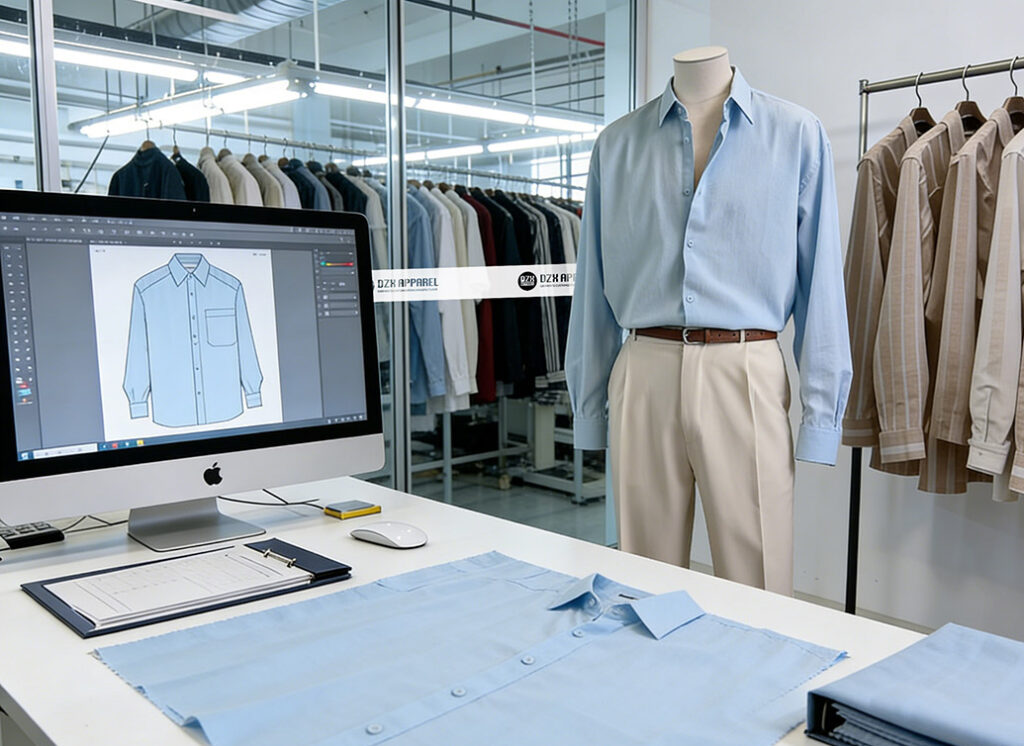
Why Linen Shirts Are the Core of Summer 2026 Collections
Linen and linen-blend fabrics are central to the spring/summer 2026 season. They offer the natural texture and airflow that warmer months demand. This means nearly every menswear buyer we speak with wants at least one linen shirt style in their summer range. The global menswear market, valued at USD 654.1 billion in 2025, continues its steady growth. Summer categories like linen shirts are a major part of that expansion.
Our factory produces linen shirts for brands in Australia, Canada, the USA, Netherlands, France, and Spain. These are markets where consumers value both style and breathability during the hot months. Through our OEM and ODM service, brands get shirts that match their design vision while meeting the quality standards their customers expect.
Fabric Development for Linen Shirts
Pure linen offers maximum airflow. Linen-cotton blends provide a cleaner finish. At our factory, we work with both types. The most popular composition is a 55% linen and 45% cotton blend. This mix reduces the natural wrinkling of pure linen while keeping excellent breathability. Another growing request is linen-Tencel blends. These add a subtle sheen and improve drape. Fabric weights typically range from 130 to 180 GSM for summer shirts. We source from mills that meet OEKO-TEX Standard 100 certification. This ensures no harmful substances are present in the finished fabric.
We support full fabric customization. You specify the fiber blend, yarn count, weave structure, and color. Our team prepares lab dips within five to seven working days. Once approved, we order the exact meterage needed for your order. We also support custom washes. Garment washing softens linen and reduces shrinkage before the shirt reaches your customer. This means your end consumer gets a shirt that fits correctly from the first wear.
Pattern Making and Fit Development
Fit is where many linen shirt suppliers fall short. Linen fabric behaves differently from cotton poplin or Oxford cloth. It has less natural stretch. It drapes more loosely. Our pattern makers understand these fabric characteristics. They adjust ease allowances accordingly. The chest, shoulder, and armhole measurements are calibrated specifically for linen shirts.
We offer fits for different regional markets. USA and Canadian brands often prefer a relaxed, generous cut. European clients, especially those in the Netherlands and France, typically request a more tailored silhouette. Australian brands lean toward a casual, camp-collar fit with a boxy shape that suits the outdoor lifestyle. Our pattern library covers all these variations. If you have your own tech pack, we follow it precisely. If you need development support, our team creates patterns based on reference samples or detailed specifications.
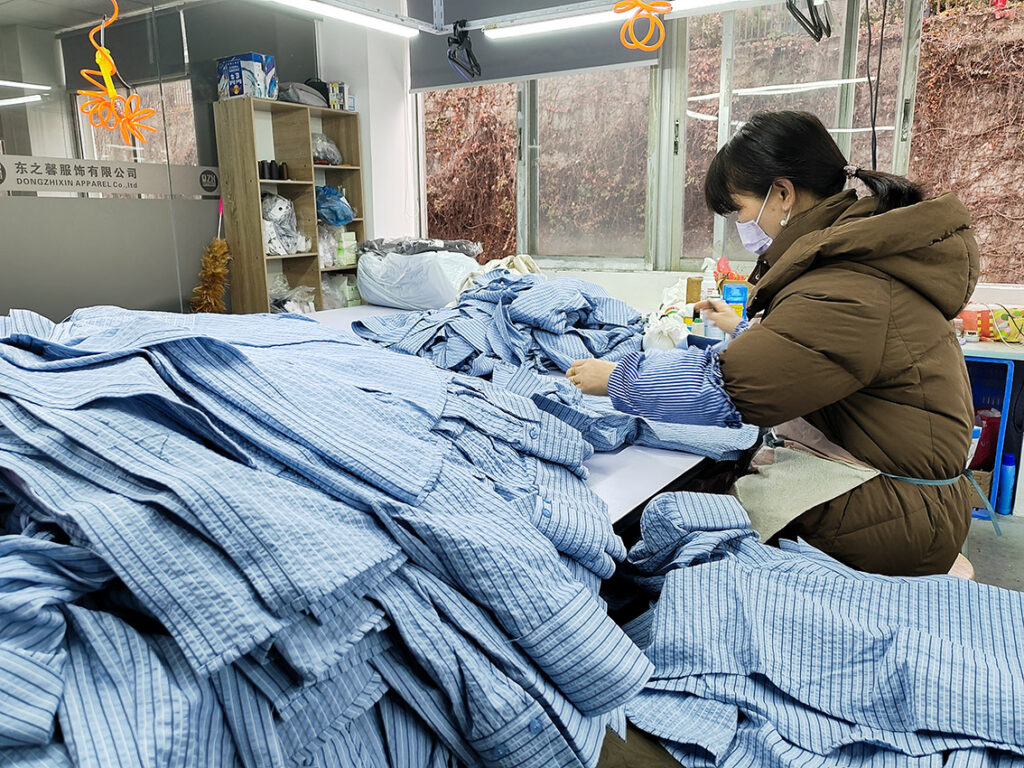
Minimum order quantity starts at 100 pieces per style per color. Sample development takes 7 to 10 working days. Bulk production lead time is 25 to 35 days depending on order size and complexity. We keep these timelines transparent from day one.
Sewing and Construction Quality
Each linen shirt passes through approximately 35 separate sewing operations. The collar gets fused with interlining for shape retention. Side seams use French seam construction. This encloses raw edges completely and prevents fraying after repeated washing. Buttonholes are stitched with precision on automated machines. Each button is cross-stitched by hand for security.
Seam strength is tested on samples from every production batch. Our quality benchmark is a minimum seam slippage resistance of 120 Newtons. This is verified through laboratory testing when required by the buyer‘s quality manual. In-line inspection checks happen at three points: after collar assembly, after sleeve attachment, and after final pressing. Inspectors check for skipped stitches, fabric puckering, and alignment issues. The defect rate target is below 1.5%. Our actual rate across 2025 averaged 0.8%, which is below the industry norm of 2-3%.
After production, shirts go to the finishing department. Loose threads are trimmed. Buttons are checked for secure attachment. Each shirt is pressed using industrial steam equipment. The pressing temperature and steam pressure vary by fabric type. Pure linen requires higher steam than cotton blends. Our operators are trained on these fabric-specific settings.
Third-Party Inspection Before Shipment
Every linen shirt order is inspected by an independent third party before it ships. We use ASAHI LINK, a Japanese inspection specialist. They have a network of 23 branch offices across China. Their inspection protocol follows international AQL standards. They check measurements against your specification sheet with a tolerance of plus or minus half an inch for chest and length measurements, and plus or minus a quarter inch for collar and sleeve measurements.
Fabric defects, colorfastness to light and washing, and button attachment strength are all examined. The inspector also verifies labeling accuracy. This includes care labels, size labels, and brand labels. Any non-conformance is documented with photographs and included in the final report. This third-party report provides independent verification of quality before goods leave China. Buyers from the Netherlands, France, and Spain particularly value this service. It helps them meet EU product safety and labeling regulations.
Packaging and Shipping
We offer multiple packaging options. Flat pack is standard. Individual polybag packing with barcode stickers is available for brands that sell through retail channels. Hanger pack with collar inserts maintains shape during transit. Your choice depends on your distribution model.
Shipping methods are flexible. Express courier takes four to seven business days for samples and small orders. Air freight works for urgent restocks. Sea freight is the most economical for bulk orders. We ship regularly to Rotterdam, Le Havre, Barcelona, Sydney, Melbourne, Vancouver, and Los Angeles. Our shipping department prepares all necessary export documentation. This includes the commercial invoice, packing list, certificate of origin, and any buyer-specific forms. We also handle the ASAHI LINK inspection report as part of the shipping document package.
Why Partner With Us for Your Linen Shirt Program
Our factory has manufactured men‘s shirts since 2008. We understand the nuances of working with linen fabric. Our team has produced tens of thousands of linen shirts for brands in the USA, Europe, Australia, and Canada. We know how to handle this fabric at every stage. Ready to add linen shirts to your summer 2026 collection? Let us send you fabric swatches and a sample development proposal.