
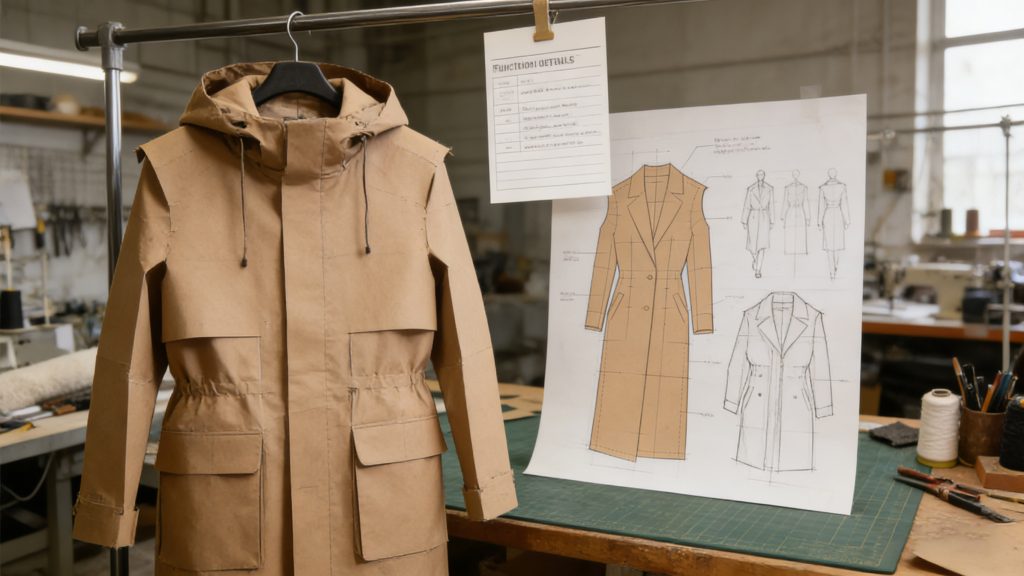
Creating a quality Men’s Winter Apparel Series involves multiple precise stages. Each phase requires specific skills and careful attention. Understanding this complete process helps brands recognize true quality and establish realistic production timelines. Let’s explore the detailed journey behind a winter apparel production run.
1. Material Preparation and Inspection
Before cutting begins, we carefully prepare all fabrics and materials. Winter fabrics like wool, technical nylon, and insulated materials arrive at our facility. First, our team inspects each roll for defects, color consistency, and proper width. This crucial step prevents issues later in production. Next, we allow materials to relax for a set period, which lets fabrics settle naturally and prevents shrinkage after cutting. Through this thorough preparation, we ensure a smooth start to the manufacturing process.
2. Fabric Spreading and Precision Cutting
This stage establishes the foundation for every garment. Precision becomes particularly crucial when working with thick or padded winter materials. Our advanced spreading machines lay fabric in multiple even layers while maintaining consistent tension. Then, computer-controlled cutting systems take over. Using digital patterns, these cutters shape each piece with excellent accuracy while minimizing waste through intelligent nesting software. Clean, sharp cuts remain essential since they ensure all parts fit together perfectly during assembly.
3. Sewing and Assembly
Here, garments truly begin to take shape. Winter clothing often features complex constructions—a single jacket may include an outer shell, a lining, and an insulation layer. Our sewing teams operate in specialized units: some focus on joining major panels, while others attach sleeves or construct hoods. Quilting serves as a key process for insulated items, securing the filling while creating that classic winter look. Additionally, we sew articulated sleeves and ergonomic seams during this stage to ensure comfortable movement.
4. Detailing and Component Application
Following main assembly, detailed work begins. This phase adds both functionality and polish as we attach zippers, buttons, snaps, and adjustable toggles. For winter coats, we typically use heavy-duty zippers and reinforced buttonholes, testing all components for smooth operation and durability. Meanwhile, we add internal elements including pocket bags, sleeve cuff adjusters, and ventilation zippers. Finally, we carefully position and sew in brand labels and care instruction tags, checking each detail for correct placement and secure attachment.
5. Surface Finishing and Treatment
Winter apparel often receives special treatments to enhance performance and appearance. We may apply water-repellent finishes to outer shells or add brand logos through embroidery or screen printing. For high-performance garments, we use seam taping to prevent water ingress. Afterwards, we thoroughly steam or press each garment to remove wrinkles and set the seams, giving every piece a crisp, finished look ready for final inspection.
6. Rigorous Quality Control
Every single garment undergoes strict quality checks. Our inspectors examine multiple points: they assess stitching strength and consistency, verify even insulation distribution without cold spots, and test all zippers, buttons, and fasteners. Furthermore, they evaluate each garment’s overall appearance, including symmetry, color matching, and cleanliness. Any item that doesn’t meet our standards goes through repair or rejection, ensuring only approved pieces advance to the final stage.
7. Final Preparation and Packaging
Approved garments receive a final professional press before we fold or hang them according to brand specifications. We carry out packaging with great care, often wrapping each item in tissue paper and placing it in individual polybags. Meanwhile, we clearly label all shipping cartons with precise order information. Before dispatch, we usually conduct a final random audit to verify correct items, sizes, and quantities. Finally, we prepare the complete order for shipping to the brand’s warehouse or directly to customers.
8. Coordination and Project Management
Efficient production requires experienced coordination. Our production managers oversee the entire workflow, synchronizing cutting, sewing, and finishing departments while monitoring progress against schedules and managing material flow. Their expertise ensures the entire Winter Apparel Series meets brand specifications while guaranteeing consistency across thousands of garments in large orders.
Conclusion: The Path to Durable Winter Apparel
Producing a men’s winter series represents a detailed, coordinated effort where every stage proves vital. Modern technology and skilled craftsmanship combine at each step, resulting in durable, functional, and well-finished winter apparel. Understanding this complete process helps brands build realistic timelines while fostering deeper appreciation for the quality behind every garment. This behind-the-scenes journey ultimately transforms design concepts into winter collections that perform beautifully and endure through seasons.