
How We Transform Your Shirt Design into Finished Products
Many brands ask about our production process. They want to know how we ensure consistency. They also want to understand our quality standards. This post explains everything from start to finish. You will learn about fabric selection, cutting, sewing, inspection, and shipping.
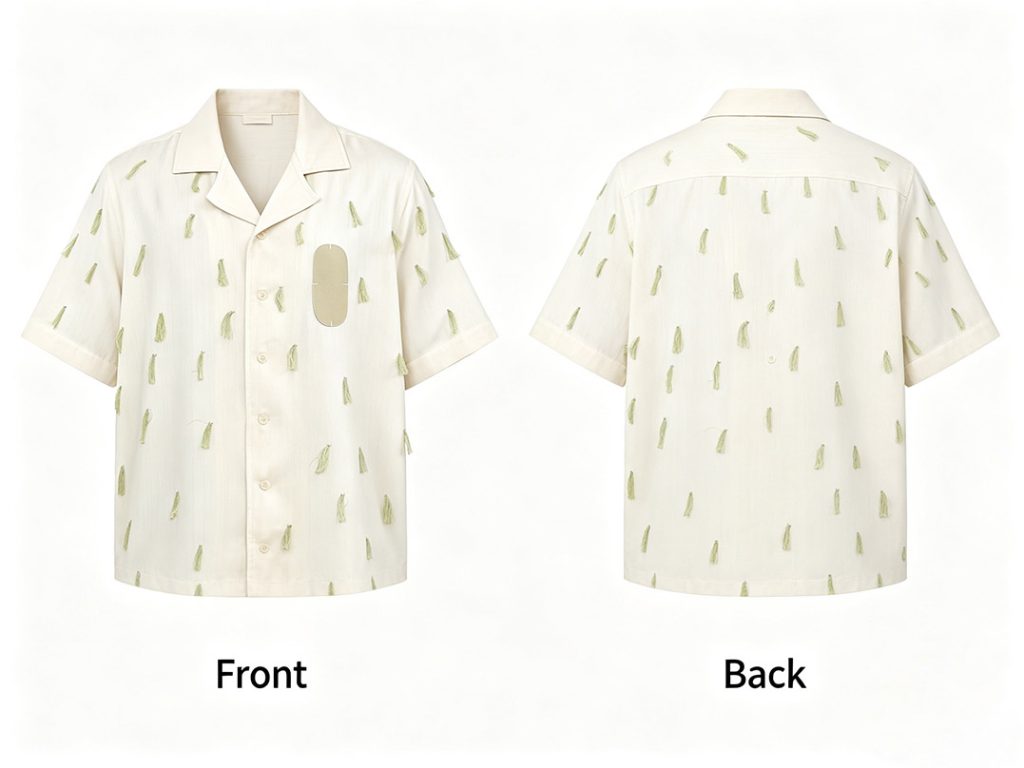
We have refined this process since 2008. Each step follows strict protocols. Our team monitors every stage carefully. This approach reduces defects and ensures on-time delivery. Our featured tassel-detail men’s casual shirt is one of our most popular custom styles. It blends a relaxed silhouette with handcrafted tassel accents.
Step One: Fabric Sourcing and Testing
Fabric is the foundation of any good shirt. We source materials from verified mills. Most of our fabrics come from Zhejiang and Guangdong provinces. These regions are known for textile quality. Our standard casual shirt fabrics include 100% cotton, cotton-polyester blends, and linen blends.
For our tassel-detail shirt, we use high-count cotton-blend woven fabric. It has a crisp, wrinkle-resistant texture and good drape. It is breathable and skin-friendly, perfect for spring and summer wear.
Before any fabric enters production, we run tests. We check color fastness to washing and light. We measure shrinkage rates after laundering. Typical shrinkage for cotton shirts is 3% to 5%. We pre-shrink fabrics when needed. We also test for pilling and tensile strength. Only fabrics that pass these tests move forward.
We help you pick the right fabric for your market. For USA and European buyers, we recommend fabrics with Oeko-Tex certification. This assures end consumers about safety. Our factory service: We provide fabric customization, including composition and finish adjustments, to match your brand’s needs.
Step Two: Pattern Making and Sample Development
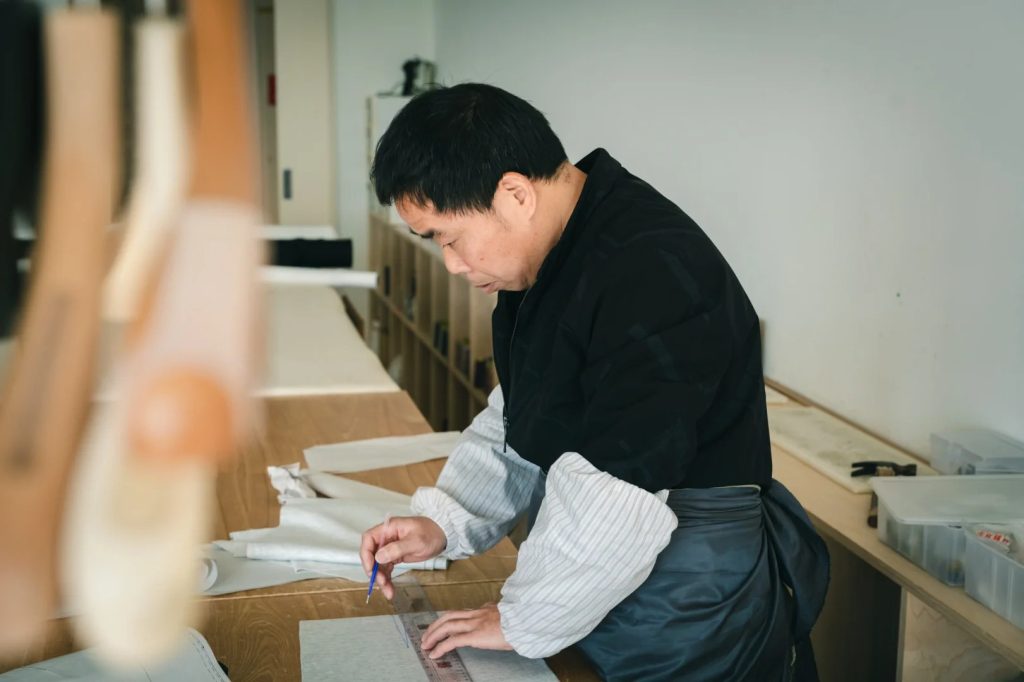
Your design starts as a technical pack or a sample shirt. Our pattern makers digitize the design. They create precise pattern pieces for each size. We use CAD software for accuracy. This reduces material waste by about 8% to 12%.
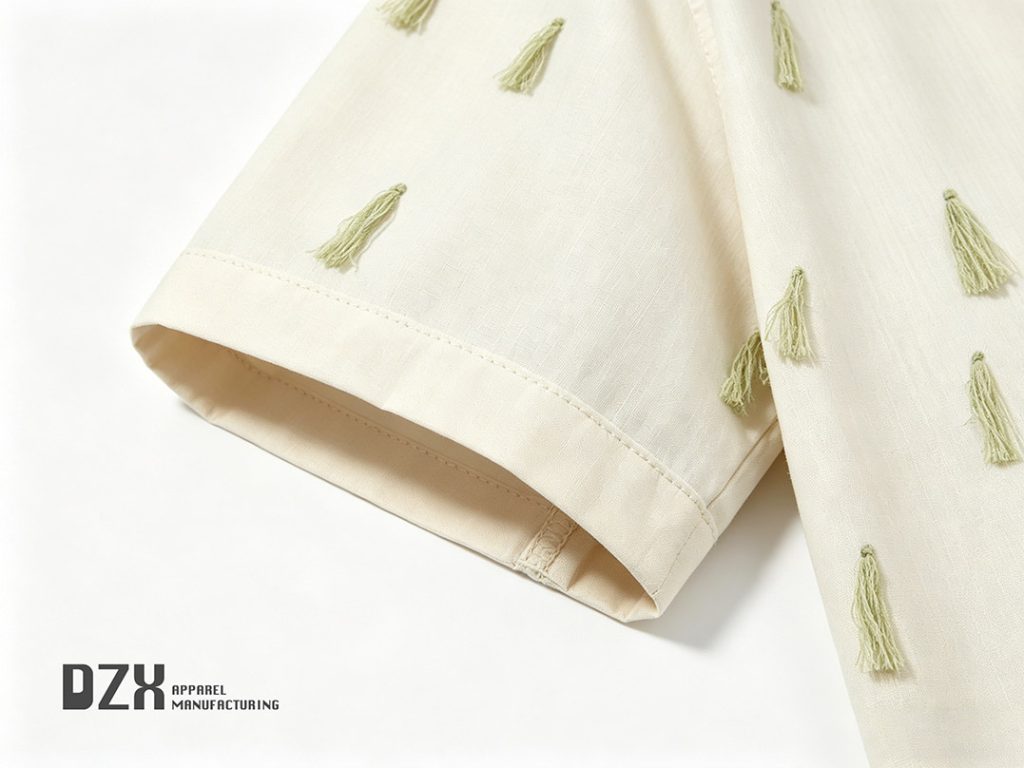
Our tassel-detail shirt has a relaxed, straight silhouette. It features a spread collar, single-breasted placket, and straight hem. Light green tassels are scattered evenly across the front, back, and sleeves.
We then cut a sample set from your chosen fabric. Our sewing team assembles the sample. This takes 7 to 14 days depending on complexity. We send the sample to you for review. You check the fit, stitching, and overall look. We make adjustments based on your feedback. This continues until you approve the sample.
Sample approval is a critical step. It locks in all specifications. It also prevents surprises during bulk production. Many of our European and Australian clients request multiple samples. That is fine with us. We want you to be fully satisfied. Our factory service: We provide full pattern customization, including silhouette and tassel placement adjustments, to match your design.
Step Three: Cutting and Preparation
After sample approval, we prepare for bulk cutting. Fabric rolls are laid out on long cutting tables. We stack multiple plies according to your order quantity. A typical stack has 50 to 100 layers. Our computerized cutting machine follows the pattern markers precisely.
Accuracy at this stage is important. A cutting error of 1 cm affects the final fit. Our machines maintain tolerances within 2 mm. This ensures all pieces are identical. We also sort cut pieces by size and color. This preparation speeds up the sewing stage.
Cutting waste is a concern for many brands. Industry average waste is 10% to 15%. We keep our waste below 10% through careful planning. We reuse fabric remnants for smaller components. This approach is cost-effective and environmentally better.
For our tassel-detail shirt, we cut the fabric to accommodate the scattered tassel pattern. We ensure even distribution of tassel attachment points across all pieces. Our factory service: We optimize cutting plans for your custom pattern to reduce waste and ensure consistency.
Step Four: Sewing and Assembly
Sewing is where your shirt takes shape. Our production line has specialized stations. Each station handles a specific operation. Collar making is done by experienced operators. A good collar requires precise interfacing and stitching. For our shirt, we use thickened interfacing to keep the collar crisp after repeated washes.
Cuff attachment follows the same standards. Buttonholes are cut automatically. Our machines adjust for button size and fabric thickness. Buttons are then sewn on with reinforced stitching. We use 4 to 6 stitches per button hole for durability. Side seams are sewn with flat-felled or overlock stitches. Flat-felled seams are stronger and lie flatter.
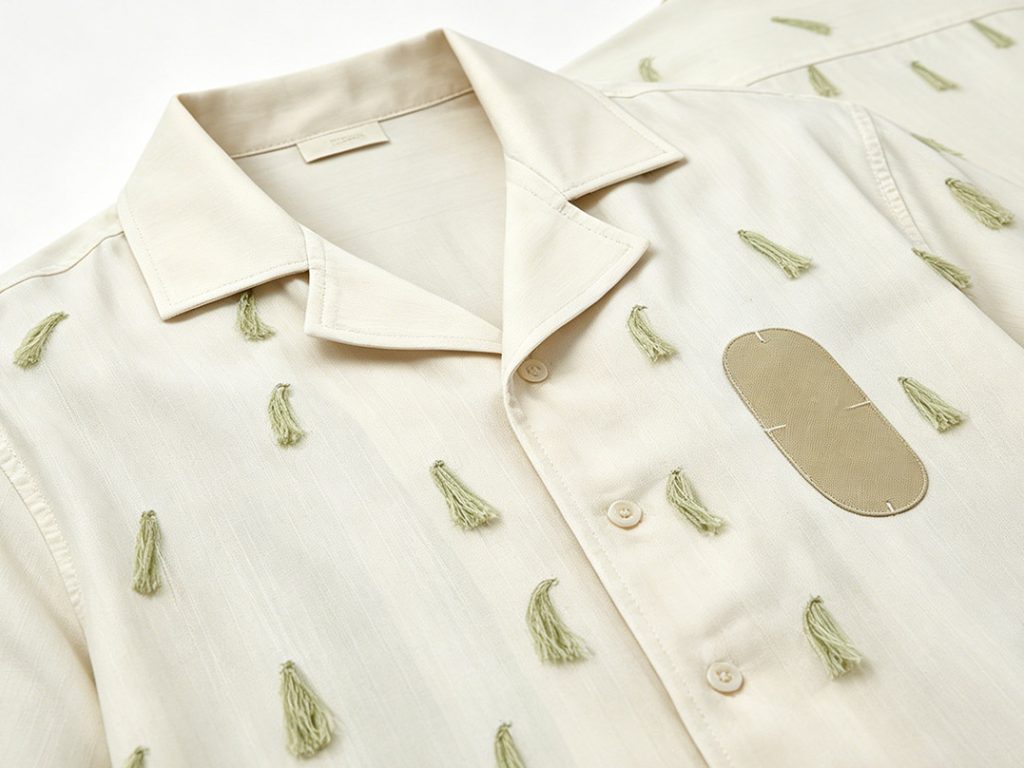
The tassels are hand-sewn onto the shirt. Each tassel is securely attached to prevent loosening. We check tassel length and placement for consistency. All tassels are fixed firmly to avoid detachment during washing.
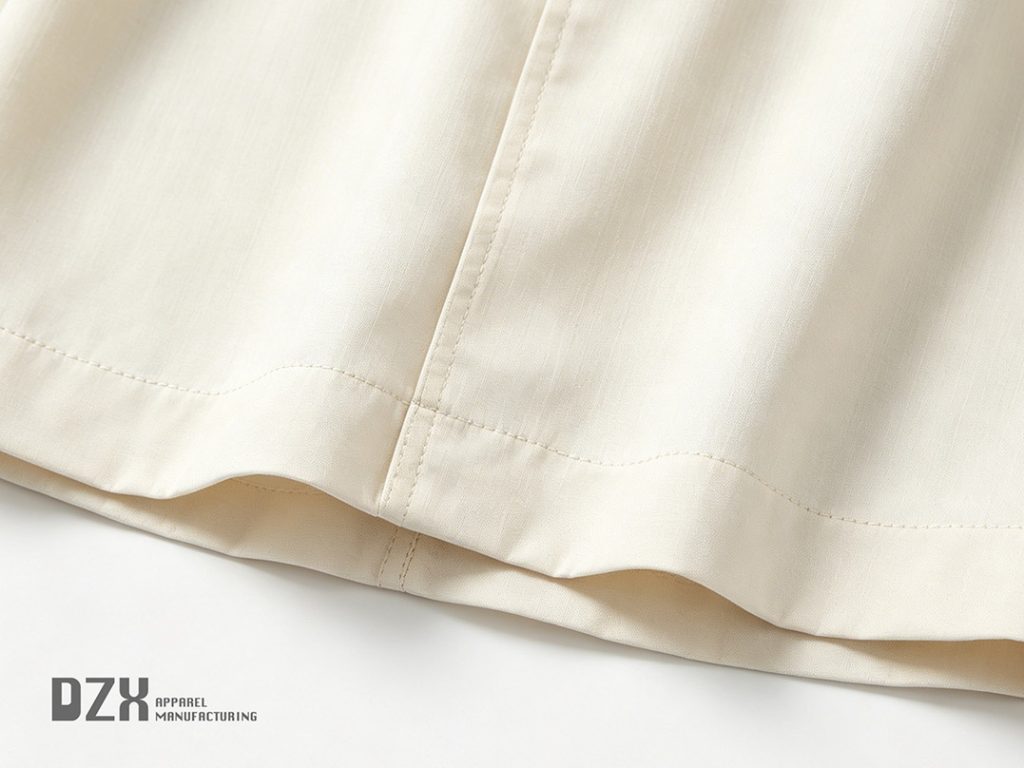
Hemming comes last. The bottom hem is folded twice and stitched. This prevents fraying and looks clean. Each operator checks their own work. Supervisors do random checks throughout the shift. This real-time monitoring catches issues early. Our factory service: We offer handcrafted tassel sewing with strict quality control for every detail.
Step Five: Finishing and Pressing
Finished shirts go to the finishing department. We trim all loose threads carefully. This is done by hand for best results. Then we inspect for any stains or marks. Spot cleaning removes minor issues.
Pressing is done with industrial steam irons. Steam relaxes the fabric fibers. This gives a crisp, professional look. Each shirt is pressed according to its fabric type. Cotton requires higher heat than polyester blends. We also fold shirts according to your instructions. Folding can be for box packing or polybag packing.
We attach labels and hang tags at this stage. Your brand label goes inside the collar or side seam. Size tags and care labels are also attached. Hang tags can be tied to buttons or inserted in pockets. Everything follows your specification sheet.
For our tassel-detail shirt, we handle each piece with extra care to avoid damaging the tassels during finishing. Our factory service: We provide custom labeling and packaging to enhance your brand identity.
Step Six: Quality Control and Third-Party Inspection
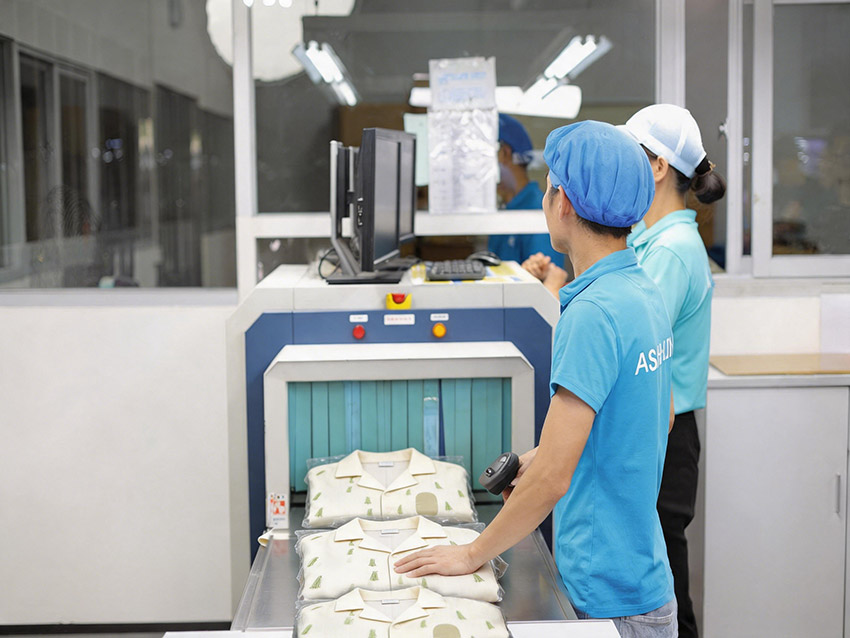
Quality control happens throughout production. But final inspection is the most thorough. Our internal team checks every shirt before packing. They look for stitching defects, measurement issues, and fabric flaws. For our tassel-detail shirt, we add checks for tassel attachment and alignment.
We also work with third-party inspection companies. This adds an extra layer of assurance. Inspectors come to our factory before shipment. They randomly select samples according to AQL standards. For a batch of 5,000 shirts, they might inspect 200 pieces. They check dimensions, workmanship, and packaging.
Common shirt defects include uneven stitching and button misalignment. Poorly attached labels are another issue. Industry studies show sloppy stitching accounts for 51% of defects. We train our operators specifically to avoid this. Our third-party inspection pass rate exceeds 95% on first try. All orders pass inspection by ASAHI・LINK before shipment. Our factory service: We provide mandatory third-party testing to ensure your products meet global standards.
Step Seven: Packing and Container Loading
Quality shirts are packed carefully. We use export-quality cartons for sea freight. Each carton is sealed and labeled. Labeling includes style number, size distribution, and quantity. This makes warehouse receiving easy.
Container loading is supervised when you request it. A third-party inspector can witness the loading. They count cartons and check for damage. They also confirm that no unauthorized items are added. This supervision costs around $268 per day plus travel. We can arrange this service for you.
Low MOQ Benefits for Growing Brands
Starting a clothing line requires investment. Traditional factories demand high minimums. This creates risk for new brands. Our low MOQ model reduces that risk. You can start with 100 pieces per color per style.
This flexibility helps you test designs before committing to large orders. You can also run small-batch collections. Many Australian and Canadian brands appreciate this approach. They can respond to market trends faster. We have supported many brands from startup to scale-up.
Why Work with an Experienced Factory
Garment manufacturing has many variables. An experienced factory knows how to manage them. We have been making men’s casual shirts for 16 years. We have seen different fabrics, fits, and finishes. This experience translates to fewer mistakes.
We also understand export requirements for different markets. USA requires specific labeling standards. Europe has chemical restrictions under REACH. Australia has unique sizing conventions. Canada follows similar standards to USA. We stay updated on these regulations.
Contact us to discuss your custom shirt project. We will provide a clear quote and timeline. Let us help you bring your designs to market.