
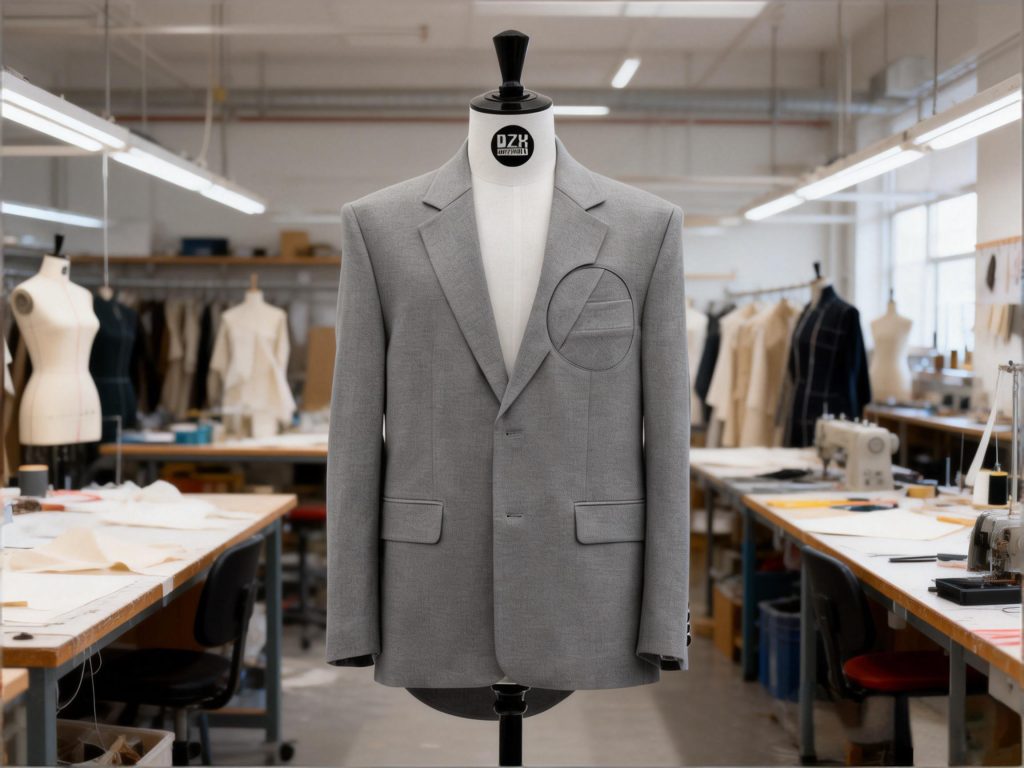
The Journey of Custom Men’s Blazers
Turning your men’s blazer concept into a physical product needs a structured process and a precision-focused manufacturer. First and foremost, every step matters—from your initial design spark to final bulk delivery. It helps you meet your brand’s standards. If you’re a growing apparel brand or a client-facing agent, understanding this workflow lets you make informed decisions. It also sets realistic timelines, quality expectations, and cost goals. Let’s dive into the step-by-step process of crafting custom men’s blazers, from idea to finished product.
Translate Your Blazer Idea into a Clear Tech Pack
The first critical step in custom blazer production is translating your idea into a clear, detailed tech pack. Essentially, a tech pack acts as the universal language between you and your manufacturer—it lets you communicate every aspect of your vision. Be sure to include design sketches (front and back views), color codes (Pantone or CMYK), fabric preferences, and size specs. Fortunately, you don’t need to be a professional designer. Many reputable manufacturers offer in-house design services. They can refine your rough ideas into factory-standard tech packs. Also, be specific about small but impactful details: lapel width (narrow, medium, or wide), pocket style (flap, welt, or patch), button type (horn, plastic, or metal), and lining preferences. A clear, detailed tech pack cuts down on miscommunication. It also ensures the first sample closely matches your vision.
The Critical Role of Sample Making in Blazer Customization
Sample making is the most important stage in custom blazer production—you can’t overstate its value. Most importantly, this step gives you a physical prototype. You can test every aspect of your design before placing a bulk order. Your manufacturer will craft a sample based on your tech pack. They’ll use your chosen fabric and specifications. Take time to have a fit model try it on. Inspect the fabric texture and check every design detail. Also, test its functionality: Does the blazer button easily? Is the sleeve length comfortable? Gather feedback from your team or target customers. If adjustments are needed—like tweaking sleeve length, narrowing the waist, or changing fabric texture—communicate them clearly. This iterative process (often 1-2 sample rounds) ensures the final bulk order matches your exact wants. It also helps you avoid costly reworks later.
Material Selection: Balancing Style and Functionality
The fabric you choose defines your blazer’s look, feel, durability, and even purpose. Notably, a trusted manufacturer will guide you through material selection. They’ll help you balance style and functionality. For example, classic, formal blazers work well with wool blends. Wool-cashmere or wool-polyester blends offer premium texture, excellent structure, and year-round wearability. For casual, versatile blazers, opt for cotton or linen blends. They’re breathable, lightweight, and perfect for everyday or business-casual settings. Polyester blends are practical for brands focused on affordability and easy care. They resist wrinkles and hold their shape well. Discuss your brand’s positioning with the manufacturer. They’ll recommend materials that align with your style goals, budget, and target audience’s needs.
Size Grading: Ensuring Fit for All Body Types
Once you approve the sample and fabric, size grading becomes key. It ensures your blazers fit diverse body types. A well-done size grading process keeps the blazer’s original design and proportions across all sizes (from XS to XXL or beyond). Expert pattern makers adjust the sample pattern incrementally. They ensure consistent fit in the shoulders, chest, waist, and sleeves for every size. Unfortunately, many brands neglect size grading. This leads to ill-fitting blazers in larger or smaller sizes. A reliable manufacturer prioritizes precise size grading. After all, it directly impacts customer satisfaction. Your customers expect a consistent, comfortable fit—no matter their body type.
Precision Production: Ensuring Consistency in Bulk Orders
Once you finalize the pattern, fabric, and size grades, the manufacturer moves to bulk production. Precision and consistency are key here. Every blazer in your order must match the approved sample. Experienced sewers use specialized machines to sew each piece carefully. They focus on clean seams, even stitching, and proper alignment of details (like lapels and pockets). Computerized cutting machines cut fabric pieces with exact precision. This reduces waste and maintains consistency. Quality control inspectors check each blazer at key production stages. They review cutting, sewing, and finishing to catch defects early. Lead times vary by order size. Small batches usually take 2-4 weeks, while large orders take 4-8 weeks. A transparent manufacturer will update you on progress every step of the way.
Sustainable Practices in Custom Blazer Production
Modern brands and consumers increasingly prioritize sustainability. Your custom blazer production should follow suit. Today, many leading manufacturers offer eco-friendly options to match these values. For example, they use organic wool, recycled polyester, or linen-cotton blends. These materials require less water and chemicals to produce. They also use water-saving dyeing and finishing processes. This cuts down on environmental impact. Additionally, manufacturers minimize fabric waste. They optimize cutting patterns and repurpose scrap fabric for small details (like pocket linings). These sustainable practices don’t hurt quality. Instead, they add value to your brand. They also appeal to eco-conscious shoppers seeking premium, responsible clothing.
Finishing Touches That Define Your Blazer’s Quality
The final finishing touches elevate a well-made blazer to a premium product. This stage involves adding custom neck labels (with your brand name), hang tags, and branded packaging. These elements reflect your brand identity. Your manufacturer can also handle small, impactful details. For example, they can add custom lining colors to match your brand palette. They can also include contrast stitching and neatly finished hems. Ensure buttons are securely attached. Buttonholes should be clean and even. Workers trim all loose threads. They also professionally press each blazer to maintain its shape and crisp appearance. These small touches may seem minor. However, they leave a lasting impression on customers. A blazer with polished finishing feels more luxurious. It also builds trust in your brand.
Choosing the Right Manufacturer for Your Custom Blazers
Crafting custom men’s blazers is a collaborative process. Your manufacturer should be a partner, not just a supplier. For starters, look for a partner with expertise in blazer production specifically. Blazers need more precision than casual apparel. They should also prioritize communication. They’ll share progress updates and respond quickly to your questions or adjustments. Ask about their quality control processes. Inquire about their size grading expertise and sustainable practices. Finally, request samples of their past work. This lets you assess their craftsmanship. A manufacturer that understands your vision, values precision, and prioritizes quality will help you succeed. They’ll turn your blazer ideas into products your customers love. They’ll also help your brand grow.